

The winds of change are being felt all over the planet. And these winds herald a future of possibilities, but also of dangers. Concerns about climate change and pollution levels are intensifying, and the need for solutions confronts us.
Logistics, being one of the most important and dynamic sectors of the economy, as well as one of the most relevant from the point of view of sustainability, is one of the main stages on which these developments are taking place.
In this article, we will analyze some of the ways in which companies in this sector have been seeking solutions for the future and which will undoubtedly continue to be relevant in the coming decades.
The term “sustainable logistics” refers to strategies for making the transport and delivery of goods in a way that is mindful of the environmental, social, and human impact that the process may have. Sustainability is generally defined as the ability to act without harming future society.
It is easy to understand the importance of environmental awareness in this activity: transport is one of the biggest causes of carbon dioxide emissions. But there is a positive side to the other face of this coin: the improvements made are also potentially very beneficial. Any innovation that makes it possible to avoid a fraction of carbon emissions in the transport of a product multiplies across millions of products over months, and gains colossal significance in the long term.
Companies also have much to gain at other levels. Innovation driven by environmental concerns increases the efficiency of processes, allows compliance with environmental regulations and guidelines, promotes savings in energy and resources, reduces waste, and improves relationships with customers, as well as the company's reputation and image.
These are some of the new paths that have been and will continue to be explored toward a greener logistics.
Reducing the levels of carbon dioxide generated is one of the central sustainability goals, and it has been pursued, with good results, through many approaches and at all levels of the logistics chain, such as, for example, optimizing transport routes and the packaging used, in terms of weight and size.
This also includes the use of renewable energy sources, such as solar and wind energy.
Sustainability is a team effort for all humanity and a project that brings us all together around a common goal. Smooth collaboration between different companies, suppliers, customers, and legislators is one of the great sources of efficiency.
Strategic partnerships, resource sharing, and jointly developed solutions, including those involving the creation of economies of scale, have been and will continue to be fundamental.
We can also frame here the commitment to the local economy, which reduces the need for transport.
It is well known that we live in the information age, and one of the major current impulses in logistics is the use of data, through technologies that allow its collection and analysis, to improve processes and increase efficiency.
Examples of this include warehouse management through specialized software or monitoring energy consumption throughout the logistics chain.
A circular economy refers to the reuse of materials so that the production of waste is minimal. This means a commitment to recycling, repair, resale, and reuse.
An ideal circularity would involve a huge reconfiguration of the economy at all levels. But fortunately, intermediate and gradual steps are possible, and current trends seem to be heading in the right direction. The term “reverse logistics” is currently in vogue, as is the concept of a regenerative product cycle. There is, for example, a wide variety of online spaces, such as Shein or Vinted, specialized in the sale of used products.
E-commerce, having created immense commercial possibilities, also generated urgent problems, related to the incredible amount of pollution currently generated by conventional home deliveries. Many consumers and organizations have sought alternatives. Fortunately, in this case, it is possible to have the best of both worlds.
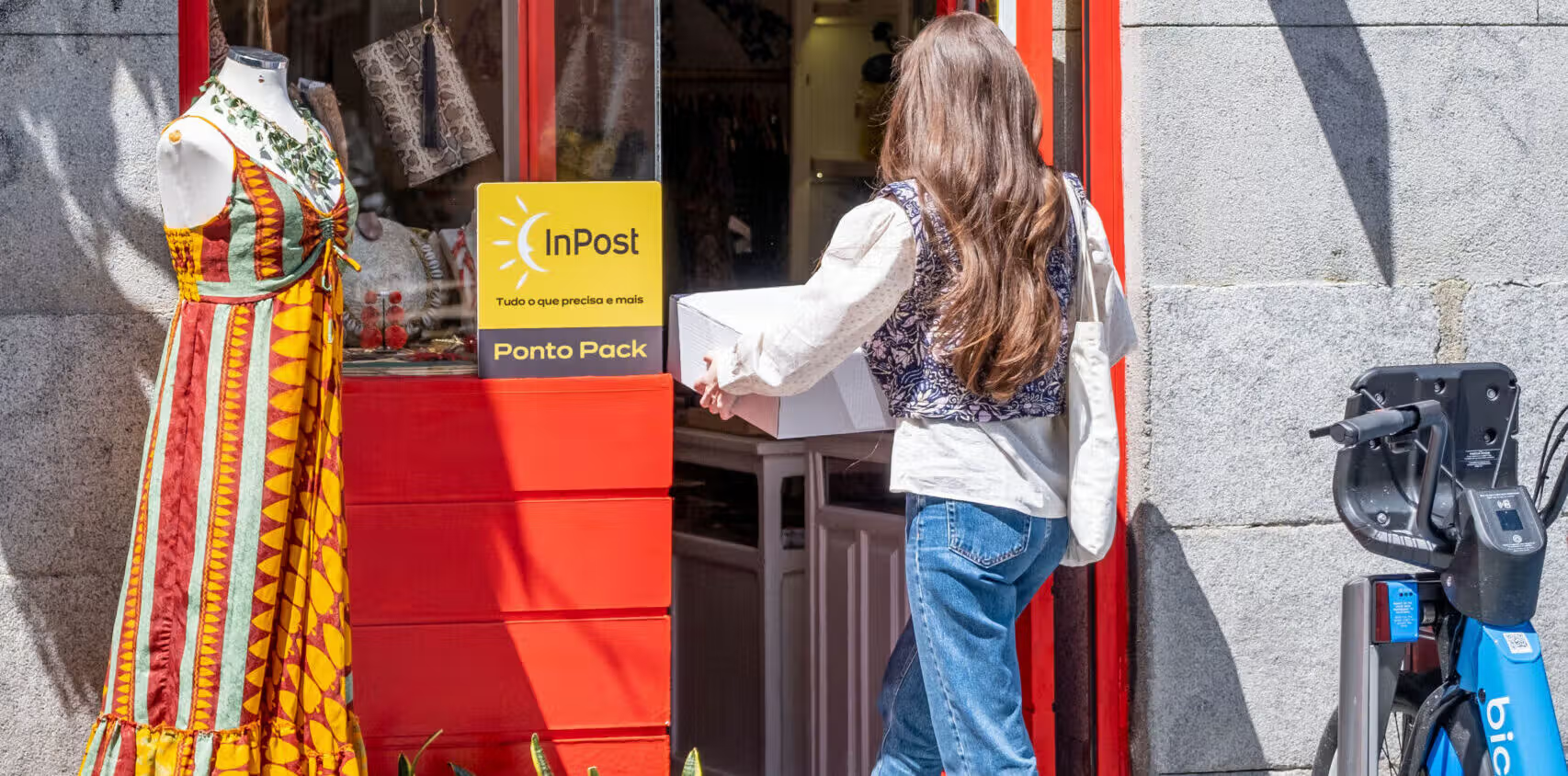
InPost specializes in non-home delivery through the use of Parcel Points and Lockers, which makes it possible to send and receive parcels in an environmentally friendly way, with a significant average reduction in CO2 emissions per shipment. This strategy is efficient, unbeatable in convenience, and represents many advantages for companies and consumers.
Visit our website and discover these advantages for yourself.
Related articles

Recommended articles

Jul 16, 2026
6 Tips to Optimize Your Company Shipments
Discover 6 tips to optimize your company shipments, reducing costs, improving sustainability and increasing customer satisfaction.
Jul 16, 2026
How to Build More Sustainable Consumption Habits
Discover practical tips to adopt more sustainable consumption habits and reduce your environmental impact in everyday life.