
Between environmental degradation, concerns about the climate, and the need to save natural resources, the idea of sustainability has become one of the major priorities of the modern world.
The vast majority of people are not insensitive to the problem and want to make a positive contribution. For example, in a recent study, 94% of respondents declared themselves willing to adopt more sustainable consumption habits. However, we do not always know what we can do.
This article is about how you, as a consumer, can be part of the solution.
What is sustainable consumption?
We call sustainable consumption the development of habits, when we shop, based on awareness of the environment and the impact of our behaviors. This impact can relate to all parts of the product life cycle, from raw materials to production, storage, transport, shipping the order and, finally, to the waste generated.
Our decisions, as consumers, have far-reaching implications in the world. Cultivating more sustainable consumption habits involves keeping these implications in mind.
Tips for sustainable consumption habits
These are our recommendations for some excellent habits to develop when you shop. In many cases, far from being expensive ideas, you will not only be helping the environment but also saving money.
1. Buy more second-hand products
Consider the idea of buying more used items. This can apply to various areas, but we will give the example of the fashion industry, which is the third most polluting worldwide. Just note that it is responsible for 20% of water pollution, and that around 92 million tons of clothing a year end up in landfills. Take a look at a second-hand clothing store, such as Vinted, where, besides finding an immense variety of quality items at affordable prices, you will be making an ecologically conscious choice.
Another suggestion regarding clothing is to prefer natural fibers over synthetic ones. The latter generate more pollution. Finally, consider investing in quality clothing instead of cheap items and fleeting trends. Although the initial investment is higher, good-quality clothing pays off in terms of durability. In the long run, you will save more if you do not have to throw what you bought in the trash after a few weeks of use and, meanwhile, the environment also benefits.
2. Buy more recycled products
This is a rather obvious tip, but one that can never be repeated enough. Often, recycled products involve materials that would otherwise have ended up in the trash.
3. Buy local and seasonal products
Often we are not aware of it, but food represents a huge part of our impact on the environment.
Prefer local and seasonal products to products that come from far away or that involve more complicated transport, production, or storage processes. Opting for local products is also a way to support the local community.
Another tip when it comes to food concerns the expiration date. Although there may be a temptation to pick the item with the latest expiration date, the truth is that, as long as we have plans to consume it before it expires, choosing the item with the nearest expiration date can help prevent it from ending up in the trash. Too much food is wasted – it is estimated that a third of what is produced every year in the world.
4. Do not use unnecessary packaging material
Packaging not only represents an enormous pollution factor in itself, but also the consumption of resources needed for its production.
Therefore, avoid packaging when possible. For example, it is better to buy fruit in bulk and in paper bags than in plastic packaging. Or, when buying water, try to buy large jugs instead of smaller bottles, which mean more plastic for the same volume of water. The same applies to buying shampoo in larger containers instead of smaller bottles, which helps generate less waste. In the same spirit, opt for reusable bags.
5. Buy fewer disposable products
This point is obviously related to the previous one. When possible, we should prefer reusable products or refills.
One of the most important applications of this idea is personal hygiene products, for which there are sometimes alternatives that avoid single-use options. For example, it is often possible to buy containers that can be refilled when they run out, instead of being thrown away.
6. Choose environmentally responsible brands
Opting for environmentally conscious brands not only gives a vote of support and encouragement to those brands, but also encourages other brands to improve their practices. The more sustainability becomes a relevant factor for customers, the more companies will orient their behavior in response.
7. Prefer non-home delivery
With the growing popularity of online shopping, the pollution generated by order distribution has become an urgent issue. And projections indicate that, if nothing is done, it will continue to worsen.
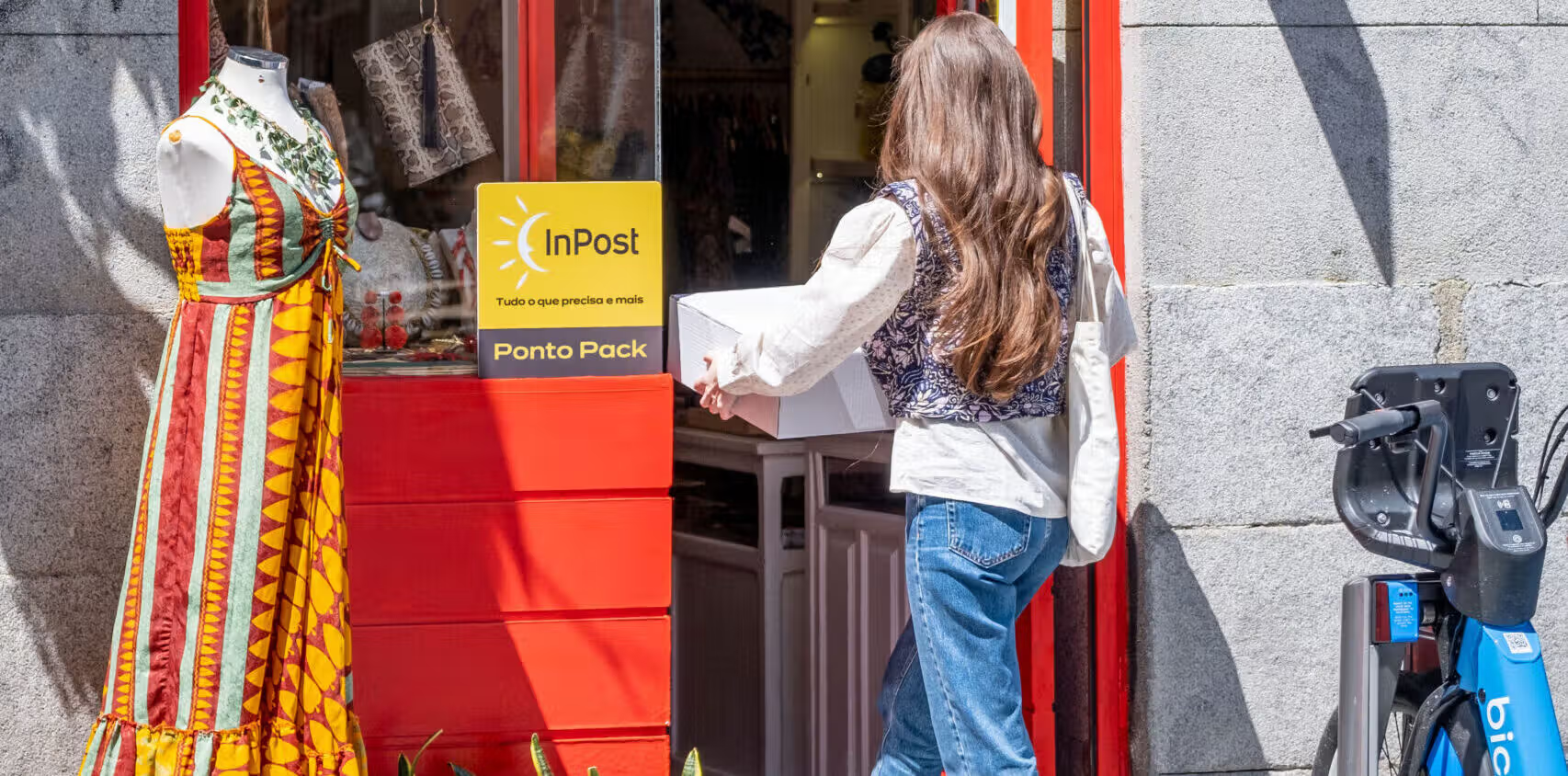
InPost is the European leader in non-home parcel delivery, a strategy that proved extraordinarily effective in combating this problem. Based on the use of Pack Points and Lockers, this approach has several advantages, which are not limited to the environmental aspect, and we believe it will become the model of tomorrow. Find out more about these advantages on our website and on this blog, and opt for non-home delivery for a more sustainable future.
Related articles

Recommended articles

Jul 16, 2026
6 Tips to Optimize Your Company Shipments
Discover 6 tips to optimize your company shipments, reducing costs, improving sustainability and increasing customer satisfaction.

Jul 16, 2026
How to Reduce Cart Abandonment
Learn how to reduce cart abandonment with practical tips to improve conversion rates and recover more online sales.