

To get a complete picture of the current world of commerce and its potential, it is necessary to know the different general types of e-commerce transactions. Whether as managers, retailers, or private citizens, and whether as buyers or sellers, this is fundamental knowledge with which we are constantly confronted in the modern economy: expressions such as B2G, or references to C2C platforms, can be heard everywhere, and their meaning, although not complicated, is not obvious at first.
In this article, we list the basic forms of business over the internet and their general patterns. Any of them may relate both to physical goods and to services, although some cases may apply more typically to one or the other.
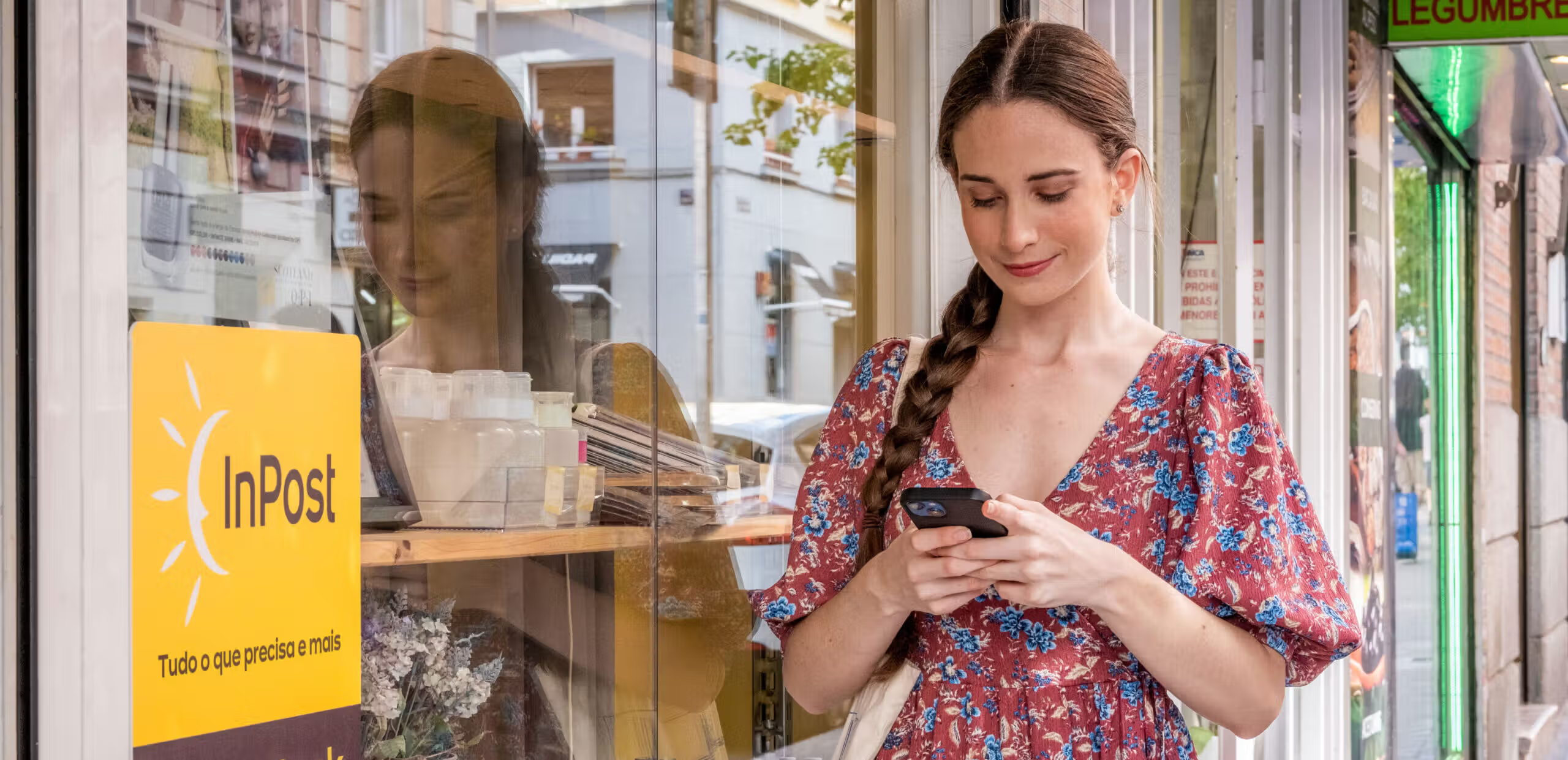
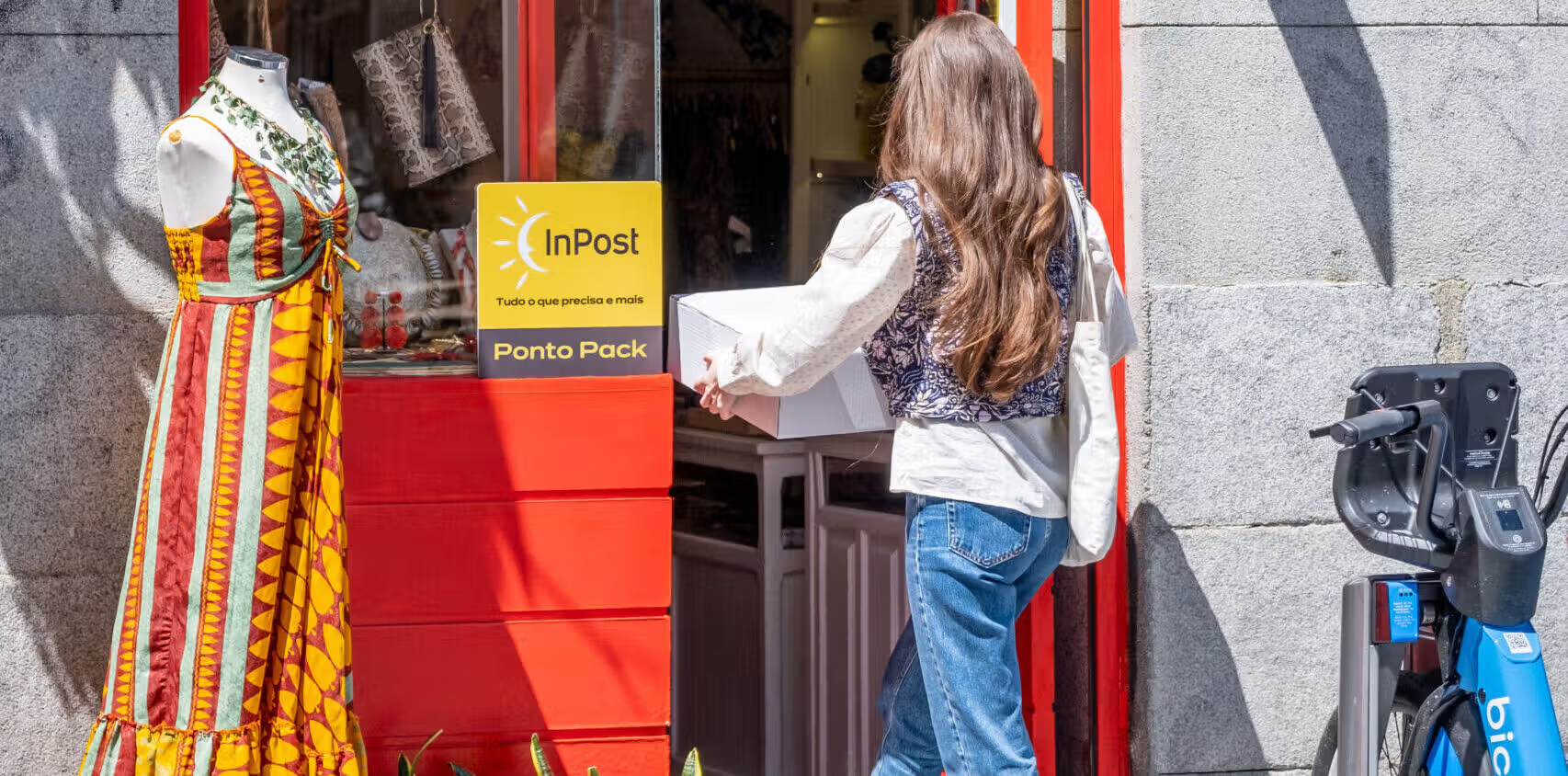
In the most typical scenario, communication and sales are carried out through the internet and the product is shipped by order. InPost specializes in a parcel delivery service based on the use of pickup points and specially designed with the challenges of modern logistics in mind. Visit our page to find out more about the advantages of our Pack and Locker network, whether for senders or recipients.
1. Business-to-Consumer (B2C)
This is the online version of conventional retail trade: a store, sometimes the producer, that sells directly to the end consumer. One of the most important differences compared with a physical store is the abundance of product information that can be made available on the website or platform, as well as the immense marketing possibilities that the internet offers, including personalized recommendations.
The growth of the internet has opened up enormous possibilities for this type of business, but competition can also be intense, and public demands are increasingly greater in terms of cheap and fast delivery, customer service, prices, etc.
2. Business-to-Business (B2B)
A business between two companies. Its characteristics are generally those associated with conventional wholesale trade: a professional atmosphere, bulk purchasing, systematized processes, and automation.
However, modern technology opens doors, such as integration with inventory management systems, new means of communication and coordination, or greater visibility and optimization of logistics processes. The ability to track an order easily, for example, is today essential, not only in B2B but in all virtual commerce transactions.
3. Consumer-to-Consumer (C2C)
This is commerce between consumers, although the word “consumer” may seem somewhat inappropriate here. The vertiginous expansion of this form of business is a consequence of the possibilities provided by the growth of the internet. Modern online communication technology has opened up a huge space for this area of the economy.
As a rule, transactions are agreed through a third-party platform. One of the attractions of this market is that it encourages the circular economy, allowing used products to be reused and promoting environmental sustainability.
4. Consumer-to-Business (C2B)
A form of commerce with a smaller volume than those we have dealt with so far, and an inverted transaction compared with what would be conventional: here, a company seeks a service or product that is provided to it by a private person. This happens frequently in crowdsourcing.
Typically, an online platform is used for the company to post an ad, and various people can make proposals, one of which is accepted. Examples are contests for logo design, marketplaces where companies can buy images or photographs from private individuals, or hiring influencers, cases in which a very popular person on social media agrees to advertise among their followers.
5. Business-to-Government (B2G)
In this type of transaction, the state or a public entity buys a product or contracts a service from a private company. The typical way this happens is through a tender or notice on an official website, to which companies can respond.
This area has grown considerably due to the increasing importance of “e-government,” that is, the use of the internet and new technologies in the work of government bodies and in state communication with citizens. Some examples are the development of electronic tools to pay taxes, fill out forms and internal government processes, cybersecurity, urban planning, or training. All of these functions have already been contracted to companies via the internet.
6. Consumer-to-Government (C2G)
Finally, we should mention transactions between private citizens and the government, which are the type of commerce with the smallest volume, in numerical terms, of all those we have described.
In these cases, the state contracts a service, or less often a physical good, through the internet. This has become quite common in some areas, such as health services and training or education.
Related articles
Recommended articles
Jul 16, 2026
6 Tips to Optimize Your Company Shipments
Discover 6 tips to optimize your company shipments, reducing costs, improving sustainability and increasing customer satisfaction.
Jul 16, 2026
How to Build More Sustainable Consumption Habits
Discover practical tips to adopt more sustainable consumption habits and reduce your environmental impact in everyday life.