
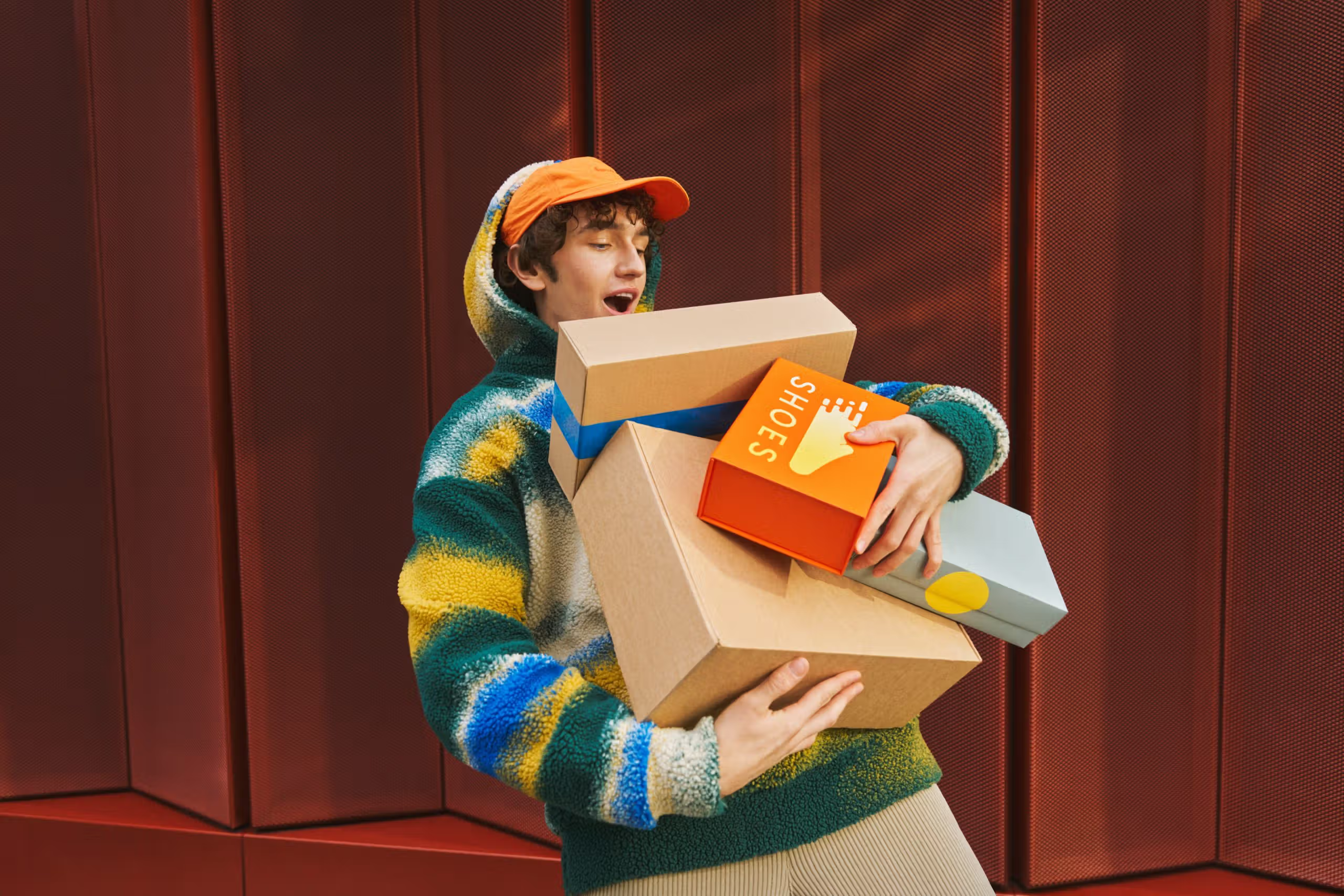
Sometimes, it is easy for companies to neglect the fact that, just like customers who enter a conventional store during the working day, people who shop online are not all the same and are not all looking for the same things. But fortunately, e-commerce customers are very diverse in their preferences, behaviors, and desires.
In this article, we will explore the main general types of online customer and how you can attract them more effectively to your store.
1. Price-priority consumers
This is the most common type of online shopper. For these people, cost is the most important criterion, and they devote themselves to browsing the internet and comparing stores in search of the best price. The obvious way to attract these customers is through promotions, sales, and other offers. However, an important concept is to try to encourage the customer to add to their focus on price an interest in the quality and value of your product, which makes it easier to promote loyalty.
The data show that online consumers are especially sensitive to shipping price. Delivery through InPost pickup points is an unbeatable way to combine quality and value in transport, in order to win over your customers who look at price above all else. Find out more about our business offer by clicking here.
2. Impulse buyers
These are people who are less concerned with investigating options and making a considered choice: instead, they make a purchase following a spontaneous attraction or desire. These consumers can be unpredictable, driven by emotions and making quick decisions.
Also included here are people who prioritize knowing what is new and whose focus is on staying up to date or discovering the latest trend. This is a more common behavior in areas such as fashion, beauty products, and technology.
These people can be very receptive to strategies such as including special offers on the checkout screen, upselling, and product recommendations, and social media is a typical way to capture their attention.
3. Organized buyers
This is, for the most part, the opposite category to the previous one. These consumers have a specific product in mind and carefully research the purchase they plan to make. Their number increases, as is logical, with the value of the purchase: expensive products deserve more consideration. Their decisions, therefore, are not quick, but they tend to form stronger ties with stores.
Good reviews are especially important, as is providing detailed product information. Another key consideration is the returns policy: a vague policy or potential difficulties in making a return easily drive away this type of customer. The network of InPost Parcel Points and Lockers is an efficient way to organize not only shipments, but also the so-called reverse logistics, helping your store offer a simple and easy returns process.
4. Casual buyers
These are people who, out of curiosity or pleasure, get involved in the purchasing process—searching, looking at items, comparing prices—but without any very concrete intention to buy. They are especially sensitive, therefore, to the experience: personalization, smoothness, and the good organization of the site.
Another way to attract their attention is to provide wishlists and send notifications about promotions related to the items on the wishlists. However, they are generally difficult to convert into sales.
5. Customers ready to buy
These are people who already know what they want and are ready to take the final step. They may include, for example, organized buyers who have already completed their research, or people who make a regular, repeated purchase. They may be willing to buy from the first store where they quickly find the product or that seems reliable.
Most of the deliberation has already been done, so the most important thing is to offer a positive experience, both in terms of site navigation and delivery. This involves, on the one hand, eliminating unnecessary steps and simplifying the process as much as possible. As for delivery, InPost's service is ideally designed for digital commerce, combining not only convenience and efficiency, but also sustainability, which is an attractive point for many consumers.
6. Regular customers
This is the most important type of customer for a store. It is important not to forget the paramount importance of retaining them once won over: many loyal shoppers will abandon a store after a bad experience.
Typical ways to do this are through loyalty programs, personalized communication, careful after-sales follow-up, or promotions, samples, and gifts on special occasions.
Related articles
Recommended articles
Jul 16, 2026
6 Tips to Optimize Your Company Shipments
Discover 6 tips to optimize your company shipments, reducing costs, improving sustainability and increasing customer satisfaction.
Jul 16, 2026
How to Build More Sustainable Consumption Habits
Discover practical tips to adopt more sustainable consumption habits and reduce your environmental impact in everyday life.