
Here is the new year that begins. And with it, the proverbial resolutions, plans, and new directions. Perhaps it is the same for your company or for your professional life. It is an occasion to look ahead and try to have a perspective on the future.
In the logistics sector, among stores, transport companies, and companies of all kinds, there have been profound transformations in recent years, driven by new possibilities and contexts. Without a doubt, the future will continue to bring new developments and show new directions.
These are five of the trends expected to continue transforming logistics in 2024.
1. Automation and digitalization
Technological progress has been one of the major factors of change. By way of example, this article of ours discusses the concept of the smart warehouse, which illustrates the results that the application of new technology to warehouses has produced.
But this is only one case. The automation of processes and the use of machines and software have caused revolutions at every step of the logistics chain. The use of artificial intelligence and machine learning, real-time data collection enabled by the Internet of Things, management information systems, and the use of robots and other machines are some of the main ways companies have sought to make work processes more efficient.
Two examples of technologies that, according to the views of some analysts, may take on great importance in the near future are autonomous vehicles and blockchain.
2. Visibility and agility
The demands of today's markets impose on suppliers, stores, transport companies, and all other players in the logistics chain the need for ever-greater coordination, communication, and efficiency.
Regarding package delivery, for example, the popularization of e-commerce has not only generated enormous shipping volumes, but the end customer today makes crucial and growing demands regarding service quality. Deliveries are expected to be made quickly, and there must be transparency and care on the part of companies in terms of customer support, providing constant information about the status and location of the package, or facilitating its return, if necessary.
3. Data analysis
The information age deserves its name. Data analysis has become increasingly relevant and has been driven by developments in management software, which allow greater integration and coordination of the entire process. This analysis makes it possible to detect areas for possible improvement, optimize processes, and make forecasts. One of its applications, which is expected to become increasingly relevant in the future, is demand forecasting – which seeks to anticipate fluctuations in the number of orders in order to make preparations.
4. Sustainability
Sustainability is one of the major topics of our time, and we must do everything we can to ensure it remains so, and increasingly so. The volume of traffic of all kinds generated by the transport of goods is one of the major factors in CO2 emissions and environmental degradation. However, companies and consumers have not been unaware of the problem.Some of the solutions that have emerged are a focus on alternative energy sources, the reuse of materials, and the optimization of transport methods. There is an effort on the part of consumers to encourage change and contribute positively, for example, through a greater focus on the local economy and the purchase of second-hand items. You may find
in this article some very practical suggestions on what to do as a consumer to help the environment.5. The last mile
The last mile, that is, the final stage of package transport, is traditionally one of the major sources of logistical headaches. Not only is it of enormous importance for the quality of the service provided and customer loyalty, but it is also prone to a myriad of problems and unforeseen issues. It is not pleasant, either for the company or for the customer, for everything to go well only to fail at the very last stretch of the journey.
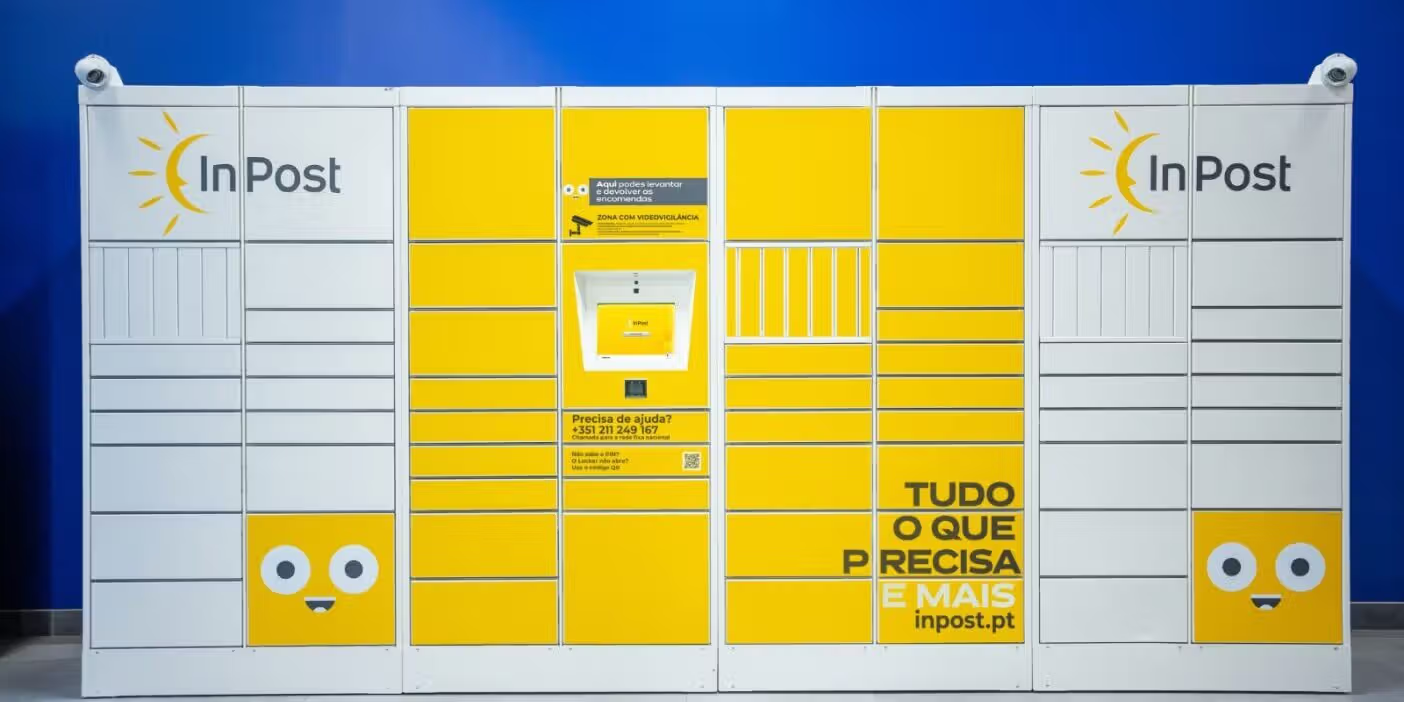
There has therefore been a felt need for new solutions in this area. This is where InPost comes in. Our approach is based on non-home delivery, through a network of more than 2000
Pontos Pack e Lockers in Portugal. This strategy has proven advantages, both for the environment and in terms of efficiency and convenience for the customer. These qualities are revealing non-home delivery as the model for the future. Find out more by exploring this blog and our website..
Related articles
Recommended articles

Jul 16, 2026
6 Tips to Optimize Your Company Shipments
Discover 6 tips to optimize your company shipments, reducing costs, improving sustainability and increasing customer satisfaction.
Jul 16, 2026
How to Build More Sustainable Consumption Habits
Discover practical tips to adopt more sustainable consumption habits and reduce your environmental impact in everyday life.