

“Personalization” has become one of the most repeated refrains in the modern business world. One of the reasons for this is the popularization of online commerce, a medium in which competition is intense, opportunities for human interaction are scarce, and stores feel the need to stand out.
In this article, we will explore some of the most important ways to personalize a digital commerce business, from website customization to the most flexible and distinctive way of sending parcels.
1. Asking for information – and knowing how to ask
Personalization strategies have a common starting point: customer information. Therefore, thinking about the available ways to collect that information is essential. This information can be important not only from an individual perspective, but also for a better understanding of your customer base as a whole.
The right way to obtain information is to ask for it. On the other hand, constant or intrusive requests can annoy the customer, so it is essential to know how to strike a balance. It is crucial not to use subterfuge and to respect the customer's privacy and choices, never acting against them.
Creating an account on the company website is a fundamental way to strengthen the relationship with the customer and to collect information, in addition to other practical functions. Surveys are another very useful tool.
2. Personalizing the web
Of course, for any online business, the appearance of the website is an essential concern. And in many cases, a website can even be customized to match the history or preferences of the customer visiting it.
One of the forms this can take is individual recommendations. One strategy whose value has been demonstrated is upselling – offering the customer a higher-end version of the item they are interested in. The same applies to cross-selling, the suggestion of complementary products.
An important type of recommendation is the list of most popular products, which can also be personalized. Many people tend to prefer the best-selling products.
3. Re-establishing contact
When a customer returns to the website, re-establishing contact based on the previous session is an effective approach, which may consist, for example, of pop-ups reminding the customer of items they viewed but did not end up buying, or personalized promotions. However, you should make sure this type of contact is not intrusive or excessive.
A common practice is to send an email as a reminder of items left in the “shopping cart” but whose purchase was not completed, or with suggestions based on purchase history. As is well known, it is much harder to attract a new customer than to win back an old one.
Another idea is to offer new customers promotions in exchange for their email contact details, for advertising purposes.
4. Based on location
For companies with a wide reach, and particularly for companies in international markets, it can be a great advantage for the website to vary based on the customer's location. A basic illustration of this is shipping costs appearing on the checkout page, which may differ from place to place. Another example is recommendations that may be more popular or make more sense in a given area.
5. Personal communication
At the heart of the concept of personalization is the idea of treating each person as an individual.
Messages via email or SMS can be very effective tools, and they will be all the more so the more appropriate their content is for the person receiving them. It may be impossible to craft each email individually, but it is often useful to segment the audience, dividing email campaign lists by geographic, demographic, or behavioral criteria. This makes it possible to adapt the content of each campaign – if you are running a promotion on school supplies, it makes sense to inform those who have already bought children's products from you.
There are multiple ways to make your interactions more personal without compromising professionalism or care in your approach. A basic recommendation is to personalize the email language, including the customer's name. But communication can take many different forms, such as personalized packaging or a birthday message.
6. Using non-home delivery
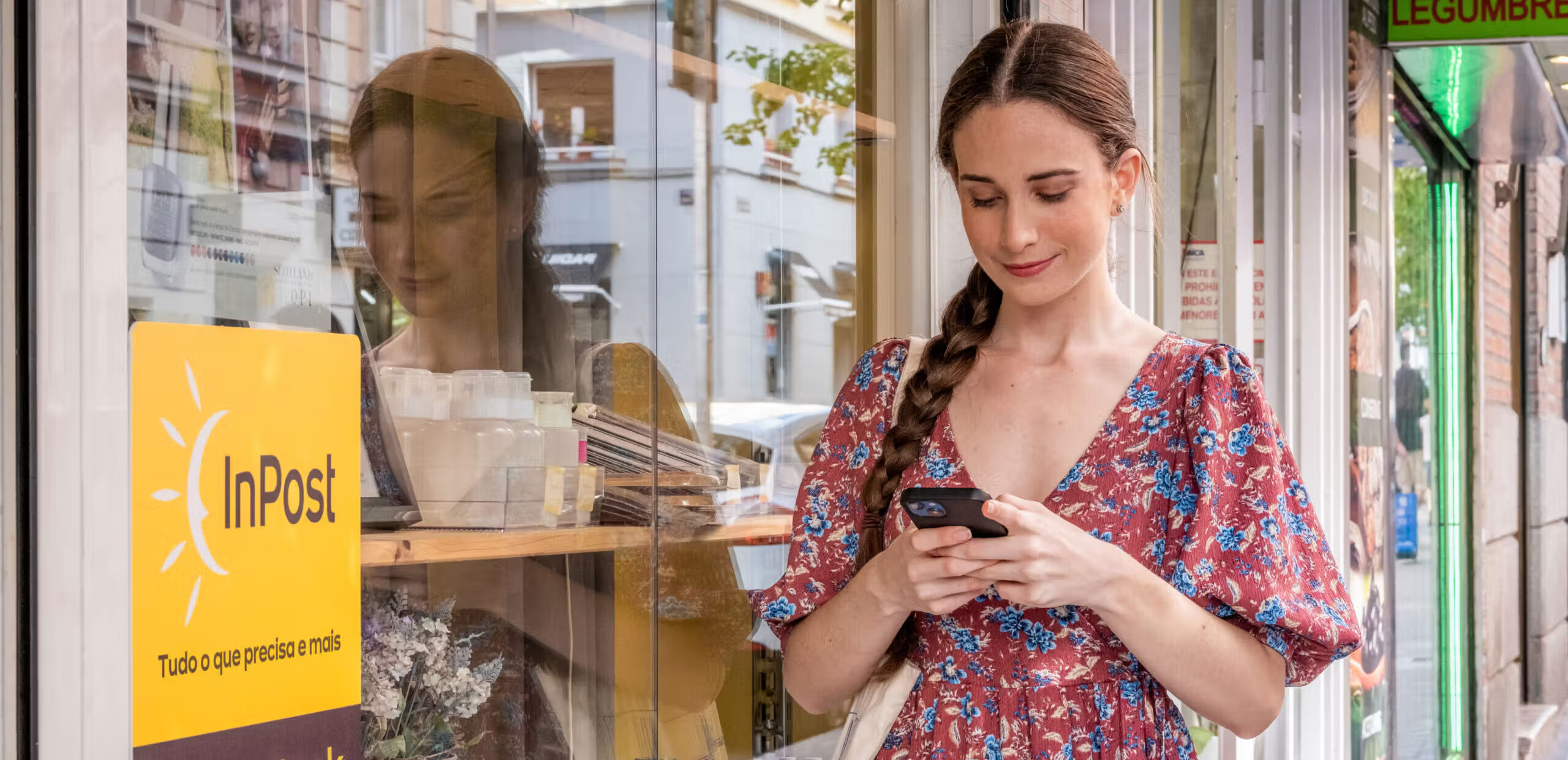
Non-home delivery, in which InPost specializes, is the most flexible and individually adaptable way of sending parcels. The recipient can pick up the parcel at a place and time of their convenience.
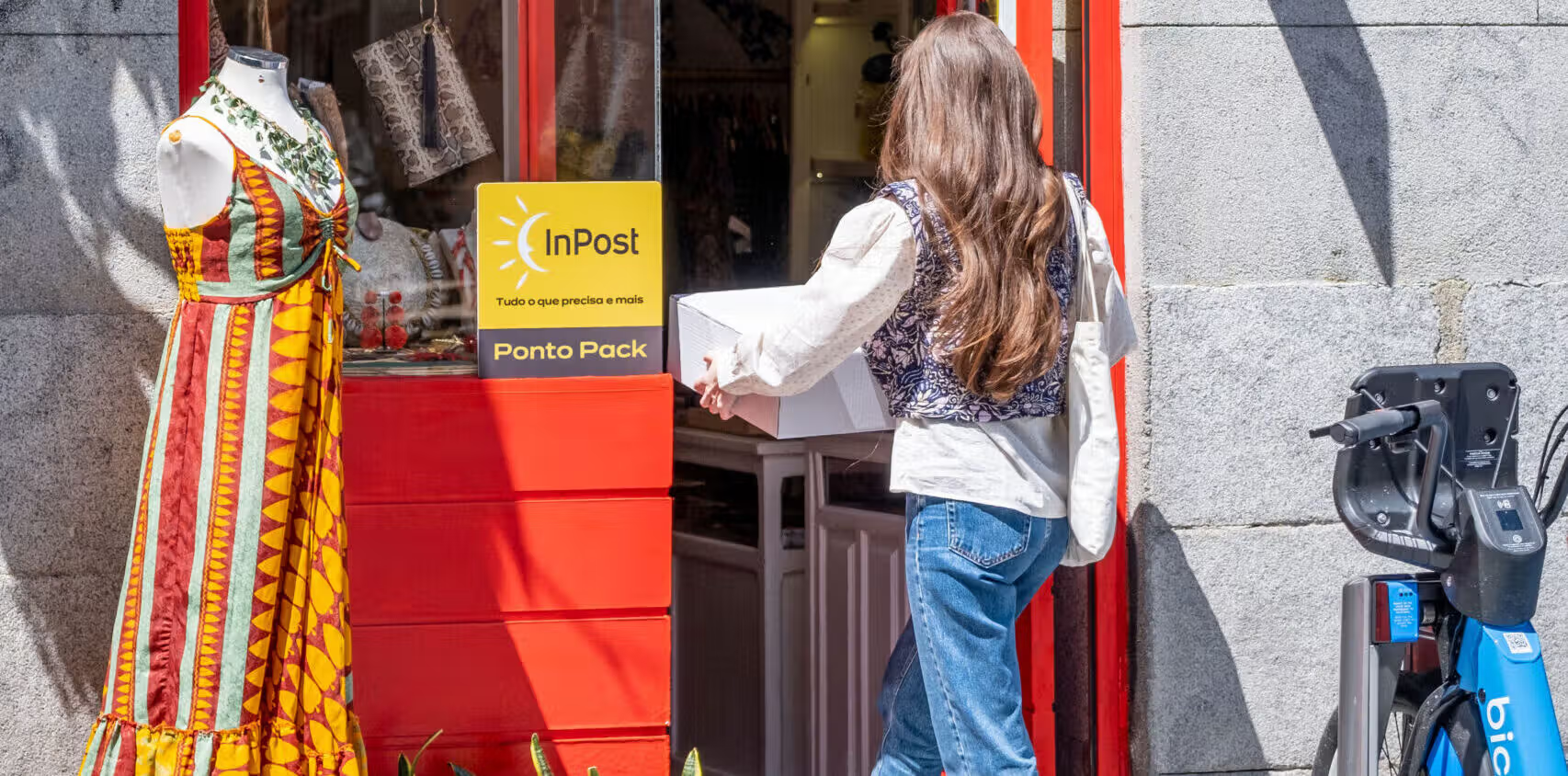
One of the underestimated aspects of this delivery method is the real opportunity for human interaction. The our Point Pack network is made up of conventional street-level stores and contributes to stimulating local commerce.
A third relevant point is the value of this type of delivery in terms of environmental sustainability. Environmental issues are increasingly important to consumers, and offering solutions committed to sustainability also helps build an ethical and human identity and image for your company.
These are just some of the benefits of non-home delivery, a highly personalized way of sending parcels. Visit our website to discover everything we have to offer you.
Related articles
Recommended articles

Jul 16, 2026
6 Tips to Optimize Your Company Shipments
Discover 6 tips to optimize your company shipments, reducing costs, improving sustainability and increasing customer satisfaction.
Jul 16, 2026
How to Build More Sustainable Consumption Habits
Discover practical tips to adopt more sustainable consumption habits and reduce your environmental impact in everyday life.