

We covered in a previous article how small changes in our habits can benefit the planet (you can read that article by clicking here). But what about major changes to our routine? What about the more active and involved ways we have at our disposal to help?
In this article, we will list the most common and important types of environmental initiative and volunteering. We will also see how it is possible to send and receive parcels in a more sustainable way through the InPost pickup point service.
Food donation
It is estimated that a third of the food produced in the world ends up in the trash. A number that represents waste that becomes dramatic when we remember the human and environmental costs it entails. Food that ends up in landfills releases methane gas, which is even more harmful than CO2.
Various associations are dedicated to making use of and giving a humanitarian end to food that would otherwise be wasted. Ways to support these initiatives include donating food and, of course, volunteering, which they often urgently need.
Of course, the most important work starts at home: planning meals better allows us to reduce waste and improve our diet. Various current apps help keep an updated inventory of the pantry and a better awareness of what we eat every day, so we can shop more carefully.
Cleaning beaches and rivers
Water pollution is one of the major environmental problems the world faces, and cleanup programs often involve organizations of volunteers dedicated to removing plastics and other trash from beaches and rivers before they end up in the sea, threatening marine life and water quality.
This is important work, representing an opportunity for concerned citizens to have an active and direct role.
The pollution generated by plastics is a serious problem of the modern world and all initiatives to combat it are important. This is one of the reasons why we implemented a shipping procedure at Pack Points that no longer requires the printing of labels. Over time, this seemingly small difference has a significant overall effect.
Planting trees
Perhaps the classic example that immediately comes to mind when we think of volunteering and environmentalism: planting trees is a simple and easy, yet effective, way to help. Trees improve the quality of the atmosphere by reducing CO2 levels, and they benefit ecosystems and landscapes.
In addition, there are organizations and associations that make planting trees a community and social activity. These institutions have helped expand urban green spaces. In cities, trees create more shaded areas and improve temperature.
And of course, it is extremely rewarding to see the sprout we put in the ground grow and become, over the years, a part of the world.
Renewable energy cooperatives
Renewable energy cooperatives are attempts to democratize and decentralize energy production and promote renewable sources. They are made up of citizens who become what are sometimes called “prosumers,” that is, people who are both producers and consumers.
Members of these cooperatives collectively invest in sustainable energy production projects, benefiting in the form of lower energy costs.
Anyone concerned about CO2 emissions from fuels will be glad to know that InPost is committed to decarbonization and that our goals have been approved by the Science Based Targets initiative: we will be net-zero by 2040.
Caring for animals
It is hard to beat the emotional satisfaction that working with animals can bring, and there are various ways to help.
Working in a shelter, for example, is not just about walking dogs, but a range of tasks, from caring for injured animals to sweeping the floor and administrative tasks. This is a form of volunteering that can be emotionally intense for many people, since it involves dealing with animals that are often in poor condition – but at the same time, this is yet another reason why it is so rewarding.
Taking part in community and urban gardens
Urban agriculture and community garden projects are still rare, but they have been success stories. And every person who joins represents a step toward their popularization and spread.
Many people enjoy the opportunity to grow their own food, and this type of initiative promotes sustainable cultivation practices such as composting, rainwater use, and crop rotation. Moreover, the products do not require long-distance transport.
InPost – the most sustainable way to send and receive parcels
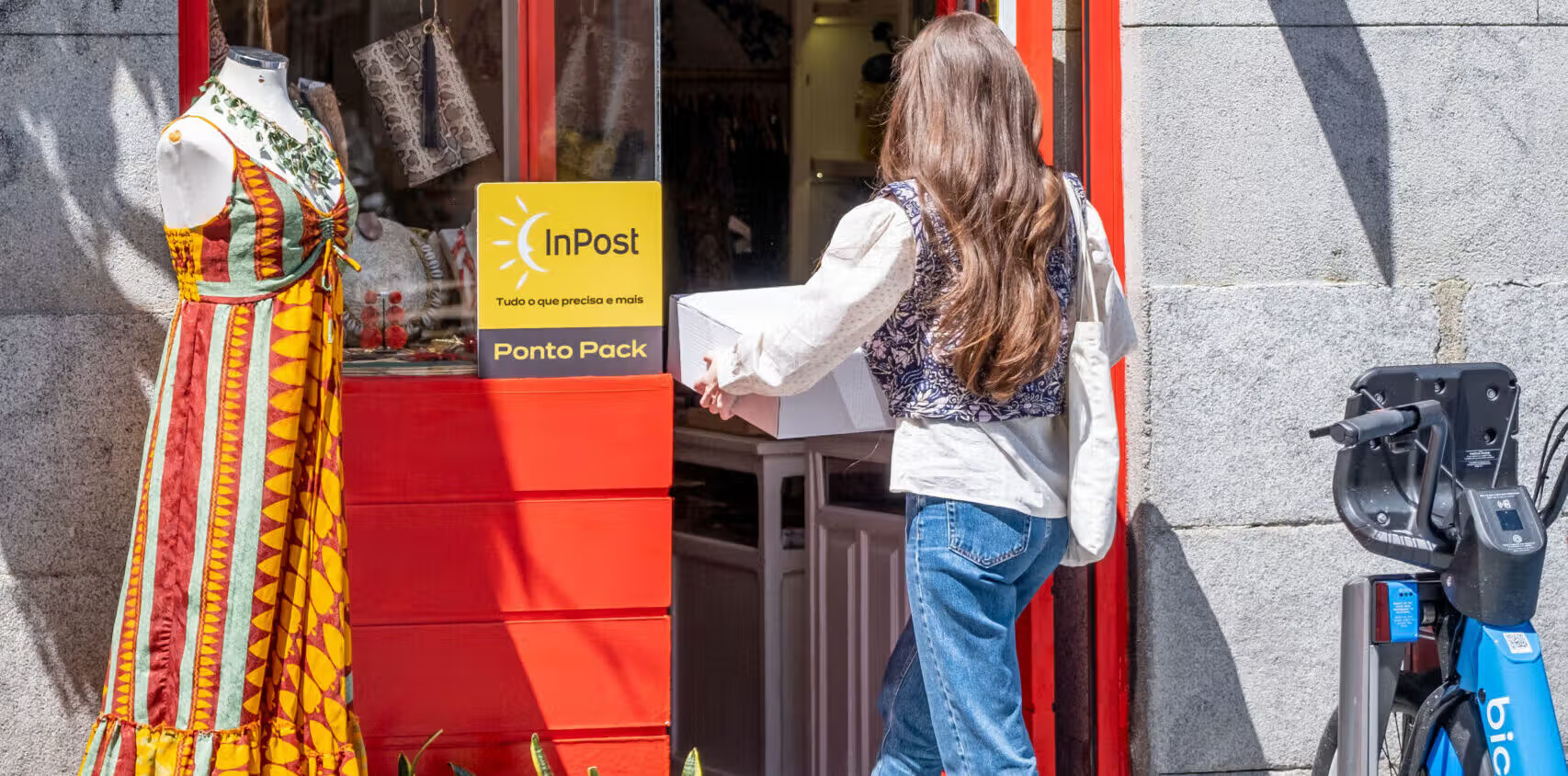
One of the problems of online commerce is the consequences for the environment, and the hybrid network of InPost pickup points represents a way that is not only efficient and economical, but also greener, to send and receive your purchases. In addition to allowing greater parcel consolidation, this approach makes use of well-planned routes and off-peak hours, resulting in a significant reduction in CO2 emissions per parcel.
We have 12,000 Pack Points and Lockers on the Iberian Peninsula, to ensure you always have one nearby. So next time you need to send a parcel or shop on a site like Vinted or Shein, choose InPost and experience for yourself all the benefits of the sustainable choice for parcel transport.
Related articles

Recommended articles

Jul 16, 2026
6 Tips to Optimize Your Company Shipments
Discover 6 tips to optimize your company shipments, reducing costs, improving sustainability and increasing customer satisfaction.
Jul 16, 2026
How to Build More Sustainable Consumption Habits
Discover practical tips to adopt more sustainable consumption habits and reduce your environmental impact in everyday life.