

One of the great, unavoidable challenges of the modern world is posed to us by environmental issues. With the depletion of natural resources and the problems caused by pollution, the need for solutions is being felt.
The logistics sector is a focus of attention, for obvious reasons: the transport of goods and people is one of the major causes of CO2 emissions, in addition to other problems, such as wear and tear on infrastructure and increased urban traffic. In fact, with the dizzying rise in the popularity of online shopping, the emissions caused by parcel deliveries have become an urgent problem, and studies predict that it will continue to get worse if nothing is done.
The good news is that there are reasons to believe that it is possible, through concrete measures aimed at more sustainable deliveries, to avoid the worst predictions and prepare a better future, and that there is an ever-growing number of consumers aware of this issue and making decisions accordingly.
The four main factors
There are four fundamental factors that determine the fuel consumption and the amount of pollution generated by a parcel: the distance of the route, the weight, the type of wrapping materials used, and the means of transport.
It is not surprising to note that, the greater the distance traveled and the heavier the item, the greater its impact on the environment, all other factors being equal. This is a good reason, among others, to prefer and promote local commerce, choosing products with a closer origin whenever available.
Wrapping materials are sometimes not very ecological or efficient. You will find in this other article some tips on this subject. Huge amounts of wrapping material are thrown away every year. It is worth, especially for individuals or companies that send large quantities of parcels, devising an appropriate strategy, which may have advantages on several levels: benefiting nature, saving costs by not taking up unnecessary space in the transport vehicle, and reducing the risk of damage to the items.
Finally, the mode of transport. Air transport is by far the most polluting. Next comes road transport. Lastly, rail and sea transport, which are the cleanest.
On the positive side, the lower the transport costs, the less pollution is usually generated, so the advantages add up. On the other hand, in general, the shorter the delivery time, the greater the pollution. Therefore, if you have a choice regarding the delivery time, the ideal is to choose, when possible, the longest one.
The last mile
The final stage of a parcel's journey - what is called the last mile - is responsible for a disproportionate amount of damage to nature. This is largely due to it being the stage in which individual deliveries diverge, each following its own route to the final customer's home. On the other hand, it is also the phase that involves the most complications and inefficiencies, the greatest of which is failed delivery, which requires the trip to be repeated.
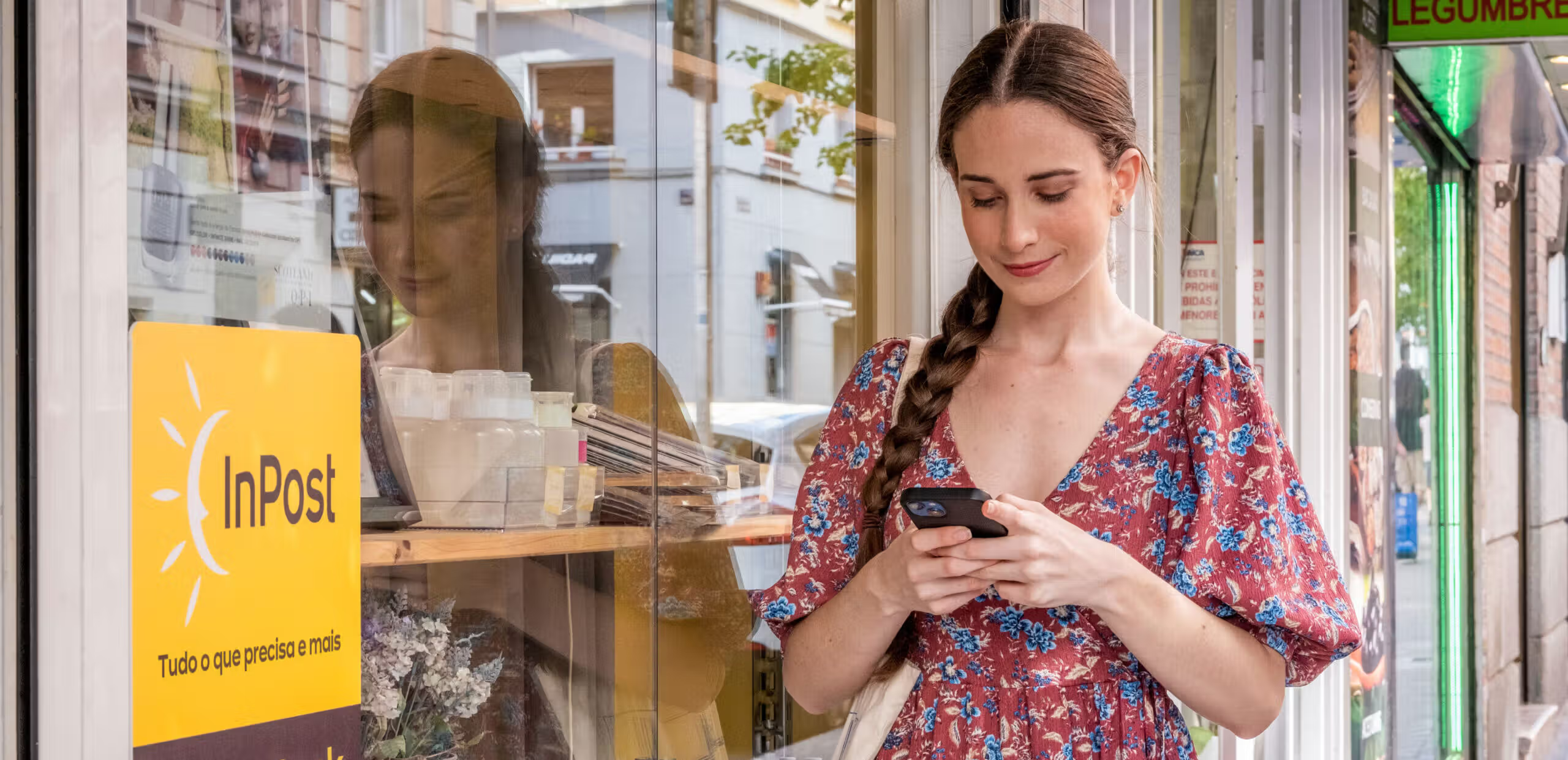
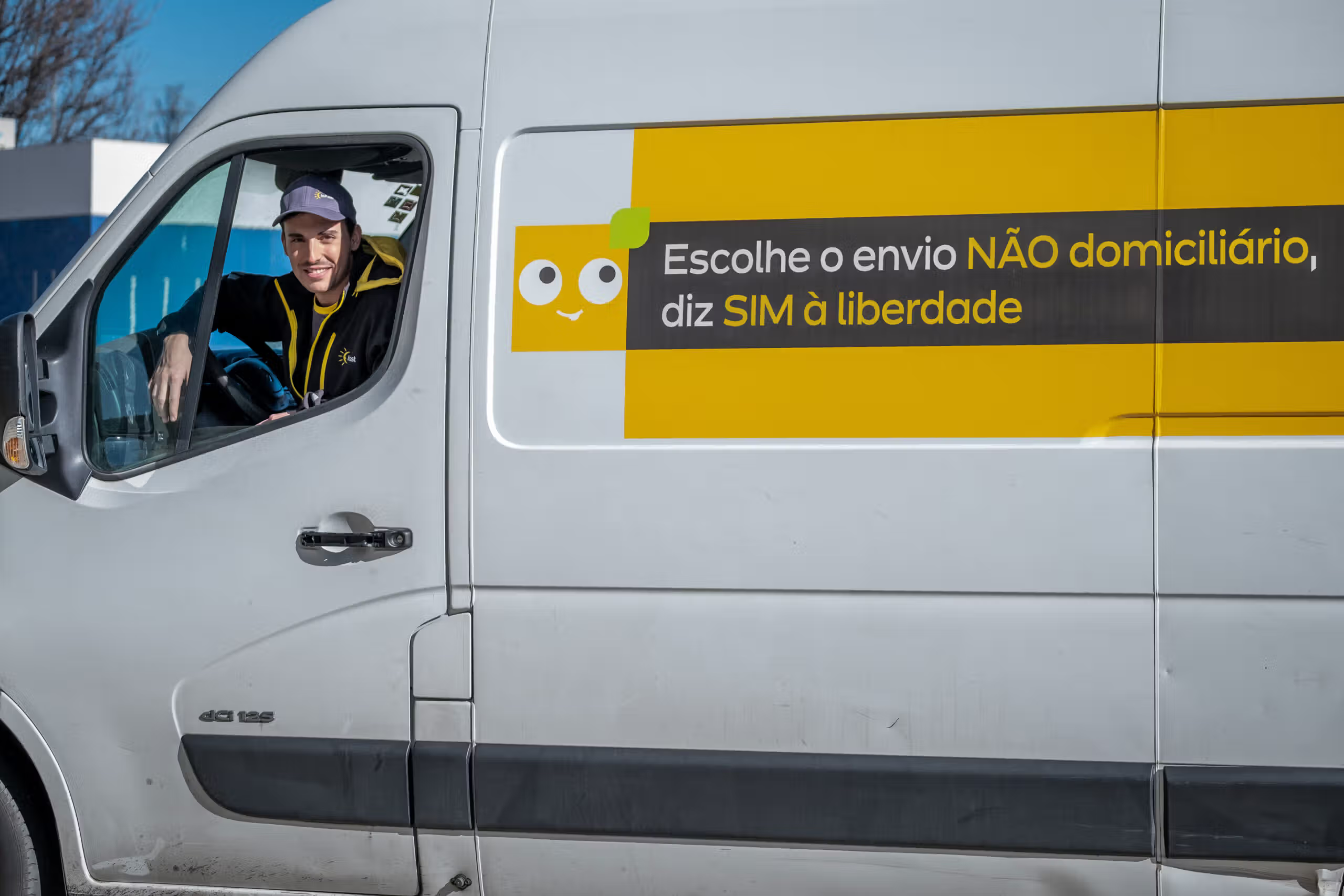
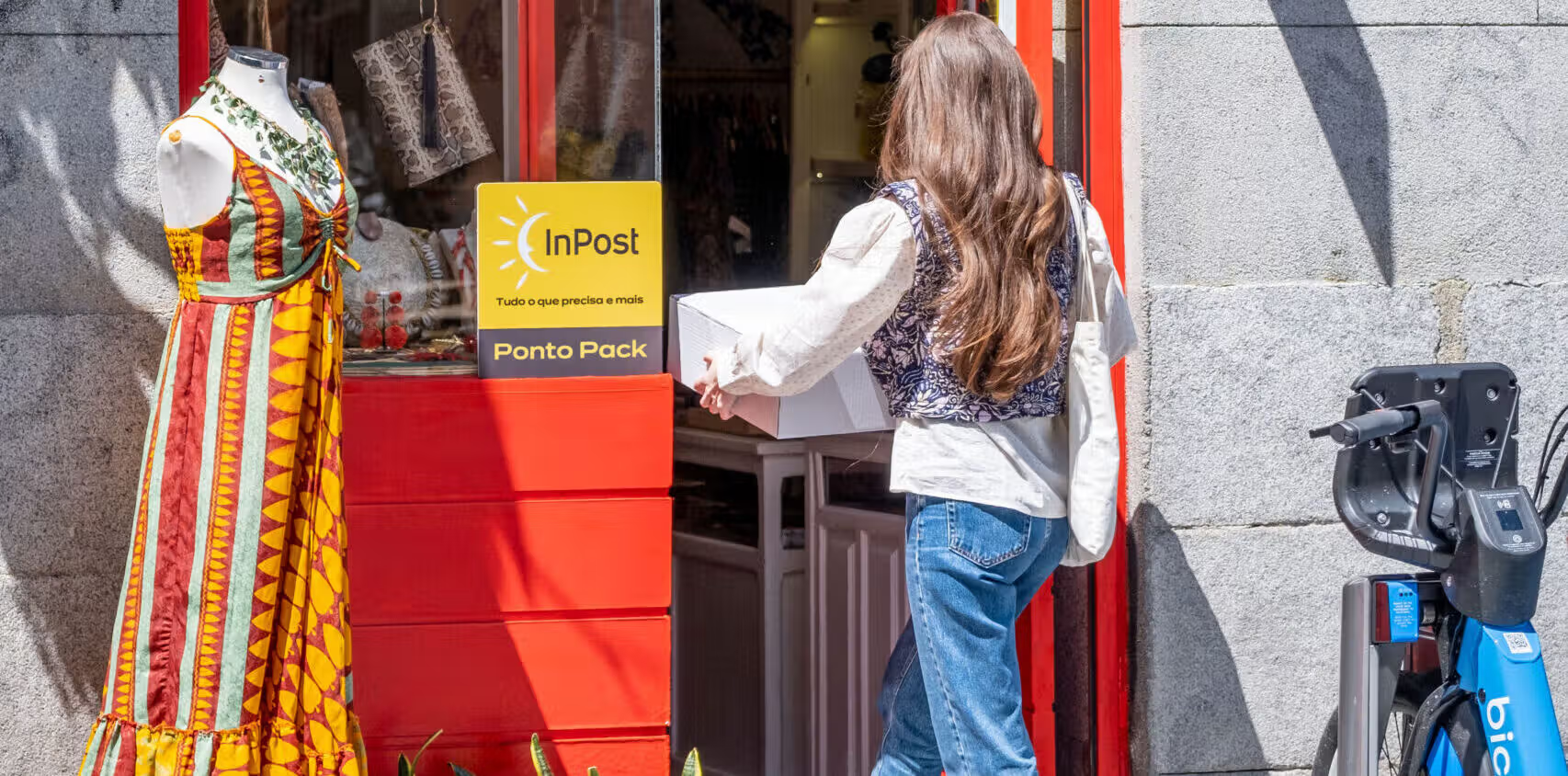
The approach represented by InPost - out-of-home delivery - proves to be an extremely advantageous model, significantly reducing the pollution caused. Making use of an extensive network of distribution points (more than 2000 in Portugal), our service makes it possible to take advantage of less busy hours and uses well-studied routes, also delivering more parcels on each trip. For this reason, it has already been proposed in studies on the environmental impact of excess traffic in cities.
In addition to the benefits for the environment, this distribution strategy has grown in popularity due to its convenience and efficiency. It stands out for its speed, since it avoids many of the complications associated with the last mile, and it does not require anyone to be at home to receive the parcel, which can instead be picked up at a nearby distribution point at the most convenient time.
Choose more sustainable logistics
One of the downsides of the popularity of digital commerce is the environmental problems it produces. However, as we have seen in this article, it is possible to spare Mother Nature without giving up the advantages of shopping online, through a few simple choices.
Small measures such as giving preference to local commerce or not always choosing the shortest delivery time, when possible, can make a real difference. And out-of-home deliveries are increasingly establishing themselves as the model of the future, with advantages on several levels. Visit our website to find out more about us and be sure to try these advantages for yourself.
Related articles
Recommended articles
Jul 16, 2026
6 Tips to Optimize Your Company Shipments
Discover 6 tips to optimize your company shipments, reducing costs, improving sustainability and increasing customer satisfaction.
Jul 16, 2026
How to Build More Sustainable Consumption Habits
Discover practical tips to adopt more sustainable consumption habits and reduce your environmental impact in everyday life.