
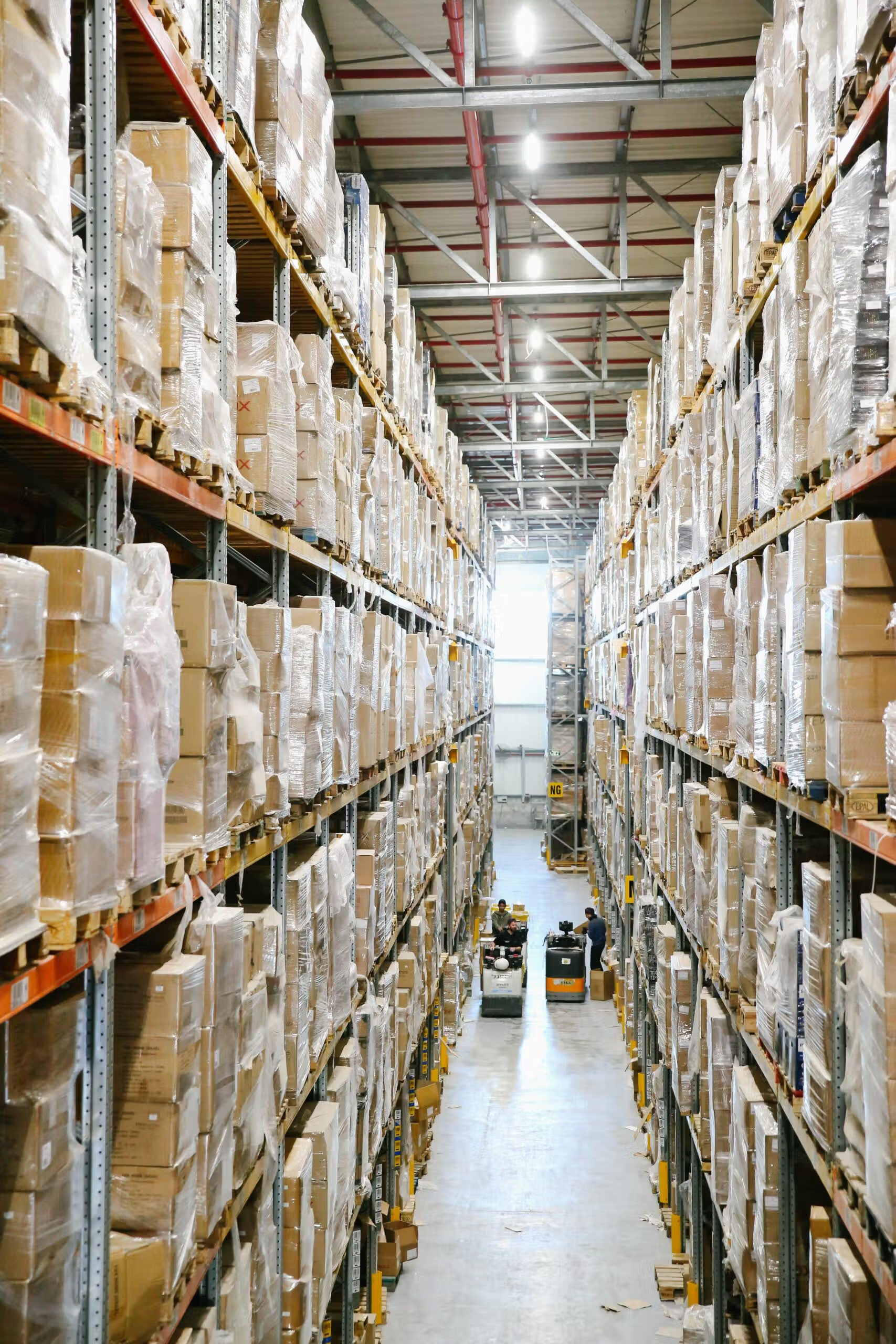
One of the most widely used expressions that can be heard associated with various types of commerce is the term “logistics chain”. In this article, we want to define what it is and explore this concept a little.
Definition
The logistics chain is the sequence of processes whose objective is to take the product from the place of production to the final customer. It involves not only the physical flow of products, but also the necessary flow of information. It is, therefore, the logistics operation, including transport, storage and distribution, seen as an integrated whole.
For optimal performance of the logistics chain, consequently, its various elements must be aligned in an efficient and logical way. Among other things, this requires close cooperation between producers, suppliers, logistics services and customers.
The ultimate goal of the logistics chain is to deliver the correct product to the customer, at the expected time and indicated location, under the agreed conditions, in the most efficient way possible, at the lowest viable costs.
And the supply chain?
Although the logistics chain is often used as a synonym for “supply chain”, logistics is one component among others of the supply chain.
In addition to logistical tasks, that is, the movement and storage of products, the supply chain also encompasses their design and manufacturing. Therefore, supply chain management covers a broader area, applying to the entire process, from the creation of the product from raw materials to its delivery to the consumer.
Reverse logistics
A logistical element whose relevance has grown exponentially in recent years, due to the increase in digital commerce, is reverse logistics, which refers to the process of returning an item to the seller or manufacturer, that is, a return.
Since returns are more common in online sales, and are also a particularly important factor for the reputation of an online store, this concept has received great attention from companies.
One of the several advantages of our delivery method – delivery through the InPost network of Pack Points and Lockers – is precisely that it simplifies the returns process in a highly advantageous way, both for companies and for customers.
Types of logistics chain
By dividing companies into three essential categories, it is possible to create a general typology of logistics chains.
Industrial organizations: these are large-scale operations, involving the production and transport of products in large quantities. Proper planning and management are essential, since mistakes and inefficiencies can easily multiply. Attention to detail is of central importance.
Commercial companies: the core operation is the acquisition of products for retail or wholesale sale. The flow of products is continuous, characterized by concerns such as maintaining adequate stock of items to meet demand. This makes an efficient and well-oiled logistics chain important.
Service companies: this type of company mainly sells intangible products, so the logistics chain can take on various aspects, depending on the situation and the company’s needs. For example, a hairdresser may need regular deliveries of hair products, brushes, etc.
The phases of the logistics chain
As an example, these could be elements of a typical logistics chain.
- This may include, for example, medium- and long-term study of future needs, seasonal changes, etc.
- Internal transport of goods to the warehouse.
- Receipt and recording of goods.
- Unitization. This term refers to the grouping and packaging of goods for storage and transport.
- Distribution and organization of goods in the warehouse. This often includes the use of machinery, warehouse management software, etc.
- Inventory control.
- Order processing.
- Sending the goods to stores or final customers.
- Fleet management, including maintenance.
The challenges for the logistics chain in the modern world
Today's companies recognize the fundamental importance of the logistics chain for commercial success and customer satisfaction.
This reality is underscored by the growth of e-commerce. With the need to make deliveries, there is a special focus on logistics and a need to find efficient and fast solutions. Another concern is the level of traffic and pollution generated by deliveries, which has become an urgent problem.
The alternative represented by InPost, non-home delivery, possible through our network of Pack Points and Lockers, has proved to be an appropriate response to these demands.
In addition to its agility and efficiency, this strategy stands out for its convenience for the customer. It is also much better for the environment.
Explore this blog and visit our website to find out more about non-home delivery and everything InPost can offer you.
Related articles

Recommended articles

Jul 16, 2026
6 Tips to Optimize Your Company Shipments
Discover 6 tips to optimize your company shipments, reducing costs, improving sustainability and increasing customer satisfaction.
Jul 16, 2026
How to Build More Sustainable Consumption Habits
Discover practical tips to adopt more sustainable consumption habits and reduce your environmental impact in everyday life.