
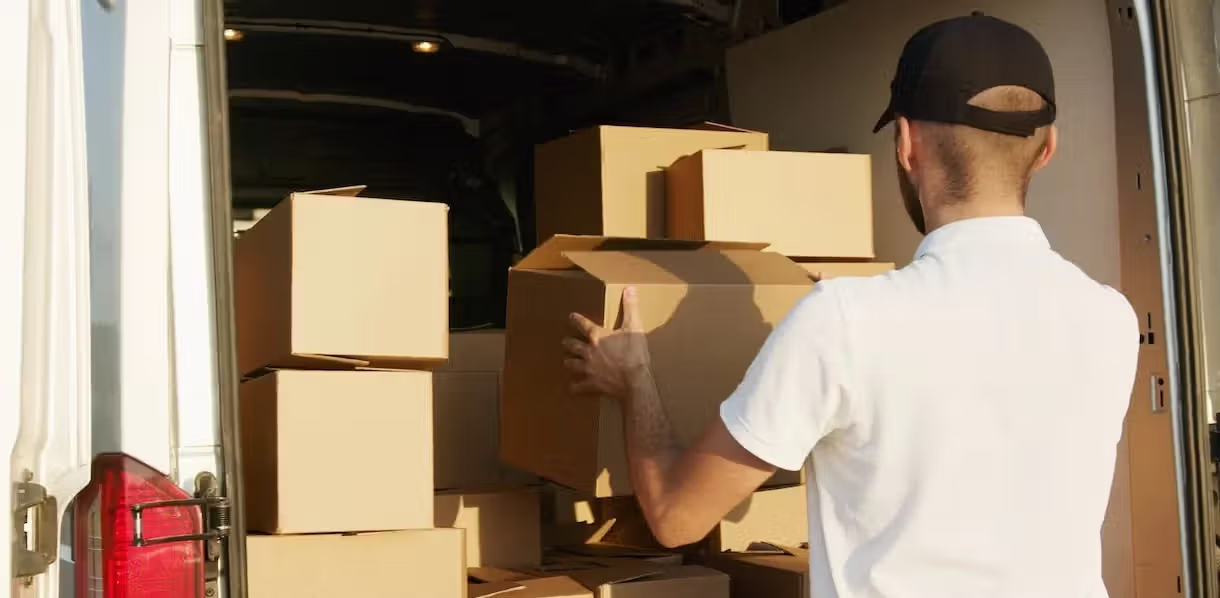
It is possible to hear the term “logistics” used very frequently these days. And yet, it is such a broad concept that it is still possible not to be absolutely certain of what it means.
On the other hand, for managers, business owners, and other people who deal with logistics on a daily basis, it is useful to have an overview of everything it involves, and thinking about its basic elements can make us more aware of problems, new possibilities, and areas with potential for improvement.
In this article, we will explore the concept of logistics as it applies to the business world, in its most essential aspects.
Definition and objectives of logistics
The easiest way to define logistics is as the process of transporting and storing goods in all its scope. More than a process, then, it is a complex set of processes, ranging from the transport of raw materials to the delivery of the finished product to the customer, and even beyond.
Good logistics management therefore seeks to ensure that products reach their final or interim destination quickly and in good condition, and that they are stored in the best possible way.
For any business, and even more so for online sales companies, logistics should be considered a fundamental concern when it comes to controlling costs, improving efficiency, and increasing service quality. In fact, studies show that logistics makes a huge difference to customer satisfaction.
Logistics is one of the most dynamic and important business sectors in the world. Changes are continuous, and major developments enabled by new technologies are currently being seen. In this article, for example, we discuss how new technologies are revolutionizing modern warehouses.
The “7 Cs”
A list has become popular in logistics that summarizes the ultimate objectives not to lose sight of in 7 fundamental points. This is the famous list of the “seven Cs”:
- Deliver the right product
- In the right quantity
- At the right time
- In the right conditions
- In the right place
- To the right customer
- And at the right cost
Logistics functions
This is one possible outline of the fundamental activities involved in the logistics process:
- Transportation, which can include any mode: maritime, road, rail, or air.
- Warehouse management, such as space utilization, organization, and the physical handling of inventory.
- Packaging and conditioning of products, whether for storage or for shipping.
- Inventory management, which involves ensuring that warehouse stock is sufficient to meet orders, without being excessive.
- Order processing, which is everything related to selecting and sending products to meet received orders.
- Monitoring, which is the collection and analysis of data to enable planning and proper management of the entire process.
Each of these activities, besides not being rigid, can involve a myriad of sub-activities. For example, transport management typically involves documentation, coordination with suppliers, etc. It can include negotiation with logistics partners, route optimization, or fleet management, if the company has one.
It is easy to see how logistics processes are necessary at different stages. They can apply, for example, to supplying raw materials to factories, internal stock transfers, or the last mile, among many other contexts. The expression “last mile” refers to capillary distribution, the final stage of delivering the order to the end customer.
It is also common these days to hear about “reverse logistics.” This concept covers the flow of products in the direction of the supplier or producer, for repair, replacement, or return purposes. This emphasis has become relevant due to the enormous increase in the number of parcel returns, a phenomenon inseparable from online commerce.
Challenges
One of the fundamental challenges of logistics today concerns environmental issues. The transport of goods has a very direct impact on the CO2 emissions generated by the economy. And the increase in commerce via the internet, based on parcel delivery, has created a situation that has reached worrying proportions, since it implies a major intensification of capillary distribution.
Other challenges are created by the competitive nature of today’s markets. The demands in terms of meeting deadlines, delivering goods in good condition, prices, and overall service quality force companies to constantly seek to improve their efficiency and their offering.
These difficulties and these new contexts also create new possibilities. This is where InPost's approach fits in. Our strategy of delivery to a NON-home address has become increasingly popular and highly successful, being not only of enormous environmental benefit, but also a response to the need for speed and convenience. Visit our website and learn more about what InPost can offer you.
Related articles

Recommended articles

Jul 16, 2026
6 Tips to Optimize Your Company Shipments
Discover 6 tips to optimize your company shipments, reducing costs, improving sustainability and increasing customer satisfaction.

Jul 16, 2026
How to Build More Sustainable Consumption Habits
Discover practical tips to adopt more sustainable consumption habits and reduce your environmental impact in everyday life.