
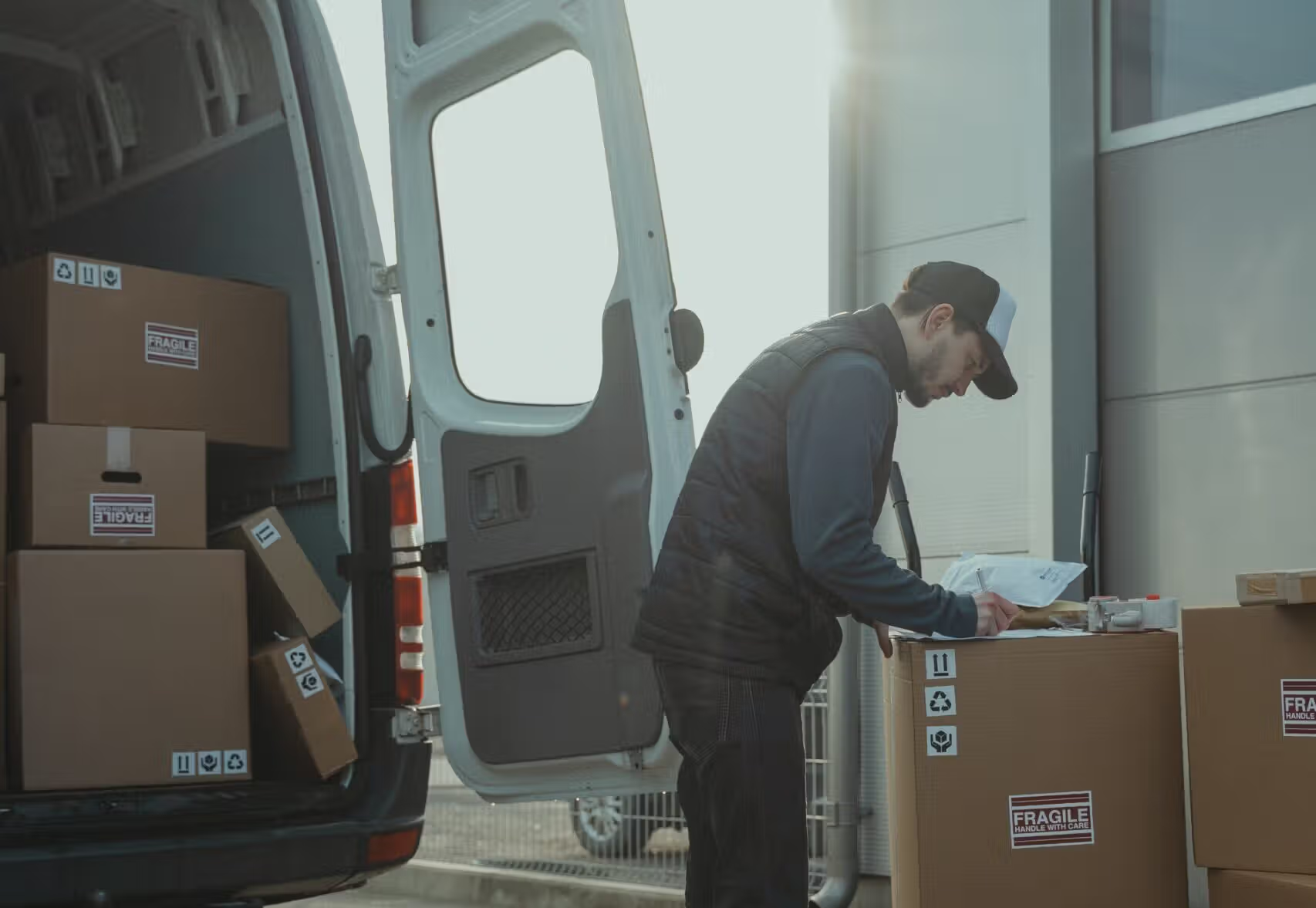
The parcel delivery is one of the most important activities in the context of today's economy, as well as the main area of activity for InPost. The popularity of online shopping, which is expected to continue growing, has placed unprecedented emphasis on this type of logistics.
Good planning and organization of the delivery process is now essential for companies to optimize their operations. In this article, we aim to outline its typical parts.
The 3 miles
We often refer in other articles on this blog to the “last mile” of logistics, which often receives special focus due to its importance for efficiency, resource consumption, and customer satisfaction.
However, of course, the last mile does not appear in isolation, but as part of a larger process of transporting products. Thus, there is also talk of the “first” and “intermediate” miles. It should be said upfront that their definitions may vary, and the ones we present below are only one possible outline.
1. First Mile
This is the start of the journey, and involves transferring products from the factory to the distribution center. It includes packaging, collection, and initial transport from the producer. Efficiency and accuracy are the main priorities in this stage.
Many companies have explored ways to reduce the number of errors and streamline the process through the use of current technologies. Likewise, a well-planned packaging process can make a big difference to transport costs and to reducing the number of damaged products. It is also at this stage that the documentation relating to the products is organized, which will serve to coordinate the rest of the process.
2. Intermediate Mile
This stage applies mainly to long-distance transport, referring to the movement of products by sea, air, or other means, to the local center or transfer facilities at the destination. It therefore involves transporting products in large quantities, often consolidated from several producers.
Intermodal transport is commonly used: for example, a load may travel by rail to a seaport, where it is loaded and sent on to its destination. Due to the legal complexities of long-distance transport, this process often involves specialized third parties, such as freight forwarders, customs brokers, etc., in addition to the transport companies themselves.
3. Last Mile
This is the final step, corresponding to capillary distribution, and involves delivering the parcel to the end customer. It is often the phase that consumes the most resources, where the most problems can occur, and which has the greatest impact on customer satisfaction, so it makes sense for companies to pay special attention to it.
We can divide it into subphases. These are the elements of this final link in the logistics chain:
Order processing
The first step involves organizing all the information related to the order, such as the type and quantity of the product or the customer's data. Care at this point helps ensure that no errors occur.
Arrival of the parcel at the transport center
After receiving the product, the delivery service will begin preparing the load for transport.
Handing the parcel over to the carrier
The employees directly responsible for transporting products to the end customer are then assigned the task, depending on delivery deadlines. Deliveries may be carried out by internal staff or transport companies.
Transfer of the parcel to the transport vehicle
This step may include additional details, depending on the characteristics of the service. For example, shipment tracking is an important feature nowadays for customers and companies, often carried out through barcodes. Each parcel is controlled by its code, and often each vehicle also has an identity associated with the code record, so it is always possible to know where a given parcel is.
Delivery
Several precautions are involved in delivery, such as meeting deadlines, being careful when handling fragile packages, studying the fastest routes, and professionalism in contact with the customer.
Conclusion
It is possible to make a general outline of the parcel transport process, thinking of the first mile as the one that has its starting point with the producer and the last as the one that has its end point with the customer; in cases of transport over longer distances, it may make sense to also speak of an intermediate stage. Each has its own characteristics and challenges.
The last mile is often the most expensive and has a direct impact on customer satisfaction. It is the most visible part of the entire chain, and all mistakes, delays, lack of care in handling packages, etc., can be crucial. It also causes significant environmental problems.
InPost represents a highly attractive option that emerged in response to current needs. It is the European leader in out-of-home delivery, through a network of more than 60,000 PUDO points and lockers throughout the continent. Find out more about the advantages InPost has to offer on our website.
Related articles

Recommended articles

Jul 16, 2026
6 Tips to Optimize Your Company Shipments
Discover 6 tips to optimize your company shipments, reducing costs, improving sustainability and increasing customer satisfaction.

Jul 16, 2026
How to Build More Sustainable Consumption Habits
Discover practical tips to adopt more sustainable consumption habits and reduce your environmental impact in everyday life.